The TASH Memorial
Restoring dignity to the victims of the transatlantic slave trade through the symbolic homecoming of soil, memory, and remembrance at the Doors of No Return.
The transatlantic slave trade represents one of the gravest crimes against humanity, forcibly removing millions of Africans from their homelands and subjecting them to unimaginable brutality across the Americas. For over four centuries, more than 12.5 million men, women, and children were forcibly taken from Africa and trafficked across the Atlantic Ocean to the Americas to be enslaved, abused, and permanently separated from their homes, families, and cultures. Many of these enslaved Africans died under brutal conditions, and their deaths were never properly acknowledged or given a proper burial. In addition, many descendants of the enslaved continue to seek spiritual closure, historical acknowledgment, and tangible homecoming.
Lives forcibly trafficked
12.5M+
Symbolic Repatriation
Collecting soil from sites of enslavement
To meaningfully restore the dignity of enslaved Africans who were stripped of it, soil will be solemnly collected from former plantations and sites across the United States, the Caribbean, and South America (not exclusively), where slaves were forced to labor in bondage.
Recognizing that extensive slave routes often transported captured Africans from inland kingdoms to coastal areas, where they were then loaded onto ships bound for the Americas, pinpointing the points of origin of the victims of the transatlantic slave trade has been challenging due to limited records and the widespread dispersal of individuals over time.
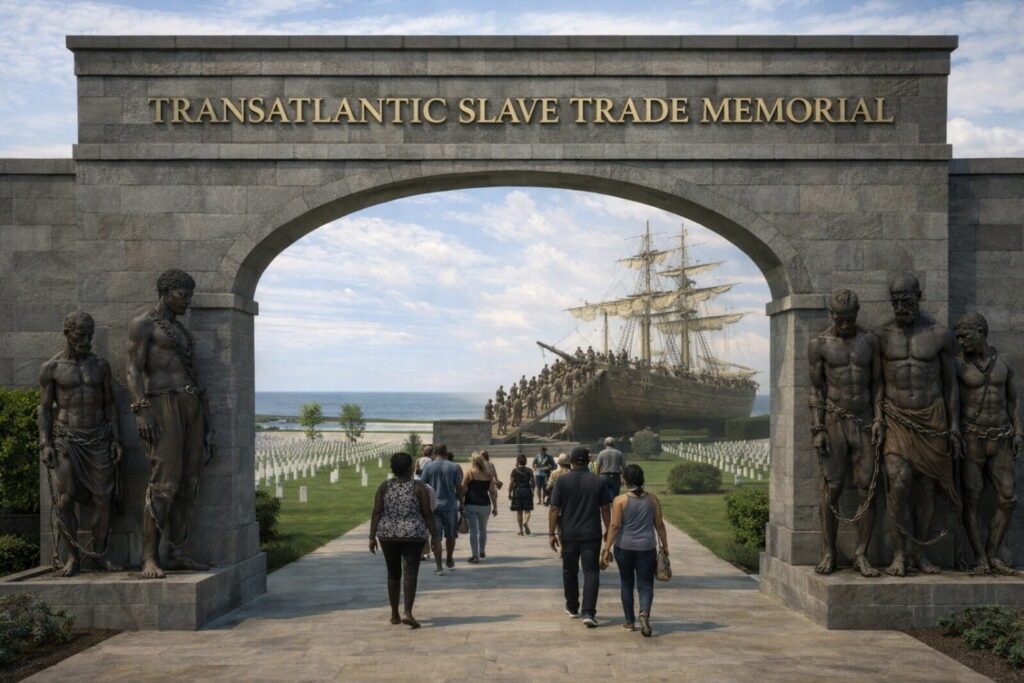
A final resting place
The Doors of No Return
Given the challenge of choosing where to transfer the remains of enslaved Africans from the Americas and other regions, and noting the lack of a unifying memorial on African soil that connects the continent with the lands where these individuals endured suffering, it is suggested that sites such as historic slave ports and the “Doors of No Return” along the African coast should be considered Africa’s final resting place for slave trade victims. Most enslaved Africans passed through these doors, highlighting their significance.
As such, the soil that still holds the victims’ sweat, tears, and blood will be transferred to the Transatlantic Slave Trade Memorials at Doors of No Return.
Memorial Design
Sculptures of suffering, resistance, and memory
To convey the suffering, resistance, and memory tied to the transatlantic slave trade, artists will craft sculptures of slave ships from materials such as bronze, wood, iron, and stone. These materials will reflect different aspects of history, memory, and resilience. Because most slave ships were built from timber, using wood provides a direct historical link. The memorial design will depict enslaved Africans in bronze chains, forced onto anchored slave ships, symbolizing captivity, forced migration, and brutal conditions.