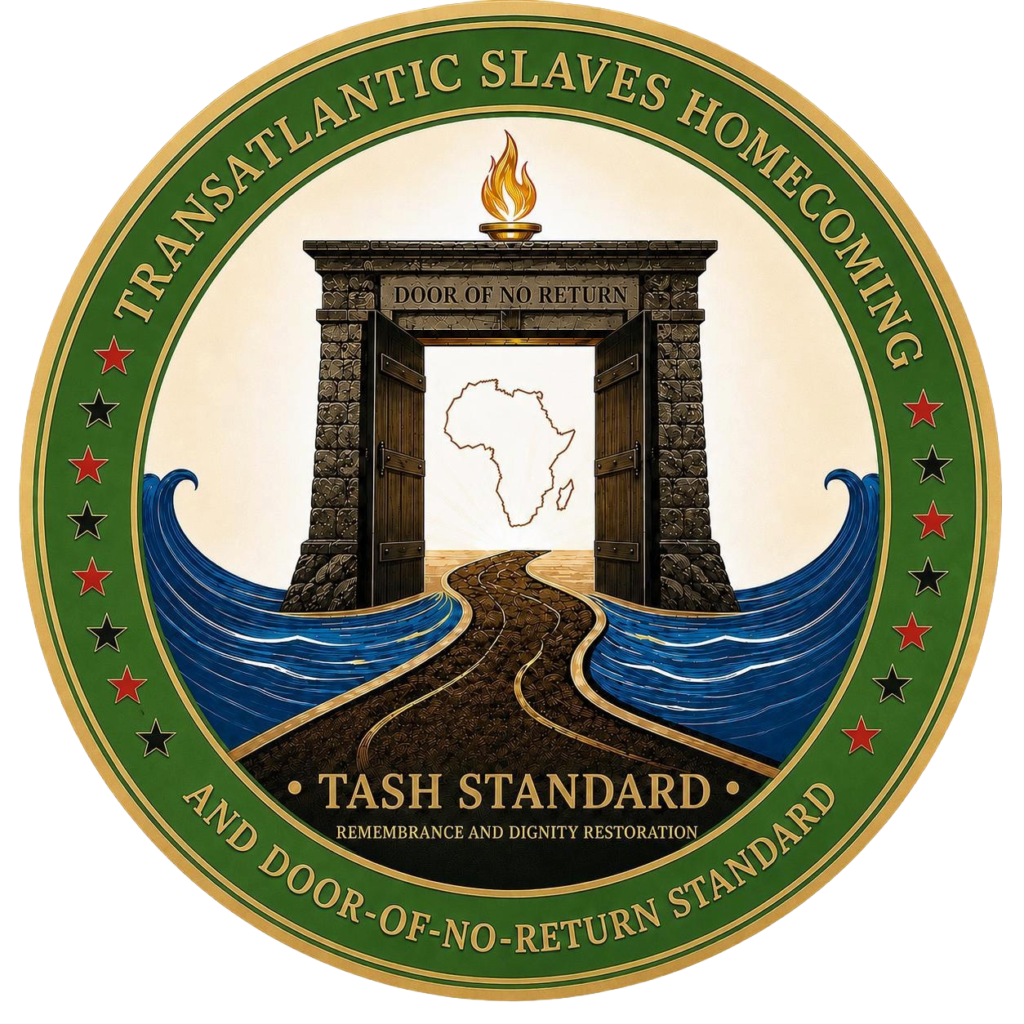
TASH Principles
This section lays out the general aims and commitments by all stakeholders, which were agreed when the TASH Standard was established in Houston, Texas, in 2026.
What is now known as the TASH Standard evolved from a growing international recognition that the victims of the transatlantic slave trade deserve remembrance, dignity, and historical acknowledgment. Today, the TASH Standard contains these principles and all related requirements for implementing the “Transatlantic Slaves Homecoming” initiative and the preservation of the Doors of No Return. These beliefs and aims are endorsed by all TASH stakeholders.
The TASH Principles provide the cornerstone of the initiative. They are:
- We share a belief that acknowledging the crimes, suffering, and enduring legacy of the transatlantic slave trade is essential to historical justice, human dignity, reconciliation, and global understanding.
- We affirm that the preservation, protection, and interpretation of sites connected to the transatlantic slave trade, including the Doors of No Return, are responsibilities to be exercised in the interest of humanity and future generations.
- We recognize that millions of enslaved Africans were forcibly removed from their homes, separated from their families and cultures, and subjected to inhumane treatment, exploitation, and death across several centuries.
- We recognize that many enslaved Africans who died during enslavement, transport, resistance, or forced labor were denied proper acknowledgment, memorialization, and burial.
- We underline the importance of preserving historical memory through education, documentation, memorialization, research, and public awareness concerning the transatlantic slave trade and its continuing global impact.
- We recognize that the Doors of No Return, regardless of their level of international recognition, possess profound historical, spiritual, and cultural significance as places connected to the final departure of enslaved Africans from the continent.
- We believe that every site associated with enslavement, forced transport, sale, resistance, suffering, and remembrance deserves dignity, preservation, and respectful interpretation.
- We affirm that the symbolic recovery and repatriation of soil from former plantations, slave markets, burial grounds, ports, and other sites of enslavement can serve as an act of remembrance, reconciliation, and restorative dignity.
- We are committed to ensuring that descendant communities, traditional authorities, governments, scholars, memorial institutions, civil society organizations, and affected communities all have meaningful participation in the implementation of the TASH Standard.
- We believe in the principle and practice of accountability in how sites, artifacts, records, memorials, and historical narratives connected to the transatlantic slave trade are preserved, represented, and communicated to the public.
- We recognize the importance of international cooperation in supporting research, preservation, education, memorialization, and cultural exchange relating to the history and legacy of the transatlantic slave trade.
- We are committed to encouraging high standards of ethical stewardship, historical integrity, transparency, and respect in all activities associated with the Transatlantic Slaves Homecoming initiative and the TASH Standard.
- We believe that remembrance initiatives should promote healing, dialogue, cultural restoration, and a greater understanding of the enduring consequences of slavery, racial violence, and forced displacement.
- We recognize that the histories of enslaved Africans are part of a shared human history and that their lives, identities, cultures, resistance, and contributions must never be erased, diminished, or forgotten.
- In seeking remembrance, reconciliation, and restorative dignity, we believe that all stakeholders have important and relevant contributions to make — including African governments, governments throughout the Americas and the Caribbean, European governments that bear the burden of atoning for those sins, traditional leaders, descendant communities, educational institutions, museums, memorial organizations, faith communities, civil society organizations, historians, archaeologists, and international bodies.